
Introduction
The judgment of God is a terrifying thing, and when individuals see it in the Scriptures, all manner of responses are seen. For some, it is so jarring and off-putting that they respond by running headlong into unbelief. They reason that if the God of the Bible judges by killing all the firstborn of Egypt, then he is cruel and not worthy of following. I would argue that this is a serious error with eternal consequences.
Yet at the same time, I understand the reality that God’s judgment is serious and severe. The author of Hebrews notes, “It is a fearful thing to fall into the hands of the living God” (Heb. 10:31). The question that I want to explore in this post is: How should we respond to or understand the pictures of God’s judgment? For the reader of Scripture—and for those who live in reality—God does judge, and we must come to grips with it.
Revelatory
The first thing that we must understand is that God’s judgment is revelatory. What is being revealed? It is the holy and righteous character of God.
It is interesting how the judgment of God makes atheists out of some because of its severity. Yet for others, judgment is not severe enough when they consider all of the evil in the world, and they become atheists because of the evil that they see.
Nevertheless, the judgment of God is revelatory, and as such, it makes plain that there are such things as sin and evil. Because God is holy, he must deal with them. How does God deal with them? Well, that brings us to the second “R.”
Retributive
The judgment of God is retributive, in that it punishes sinners.
In the Exodus narrative, the death of the firstborn does not come from out of nowhere. If one goes back to the opening chapters of the book, we see multiple instances of the Hebrew children being targeted (e.g., Ex. 1:15–22).
When we consider what happens in the final plague against the backdrop of Exodus 1, we see a holy and righteous God proportionally punishing Egypt for her sins. Not only that, but the Hebrews also receive what could be called “back pay” for the years of lost wages.
Reminder
In the introduction, I referenced those who become atheists because of the judgment of God. But what they are missing—and what must be taken into account—is that God’s judgment is also a reminder.
It is a reminder for me to take stock of my own righteousness and come to the conclusion that it is not up to par. It may not resemble the sins of Pharaoh, but like Pharaoh’s sin, it has offended a holy and righteous God.
The Apostle Paul, writing about the law, shows us that all people are marked as sinners and stand condemned under the judgment of God (Rom. 3:19–23). Instead of focusing only on God and his actions, individuals would do well to shift their focus and see their own sin and how it has offended him.
But what is to be done after that?
Repentance
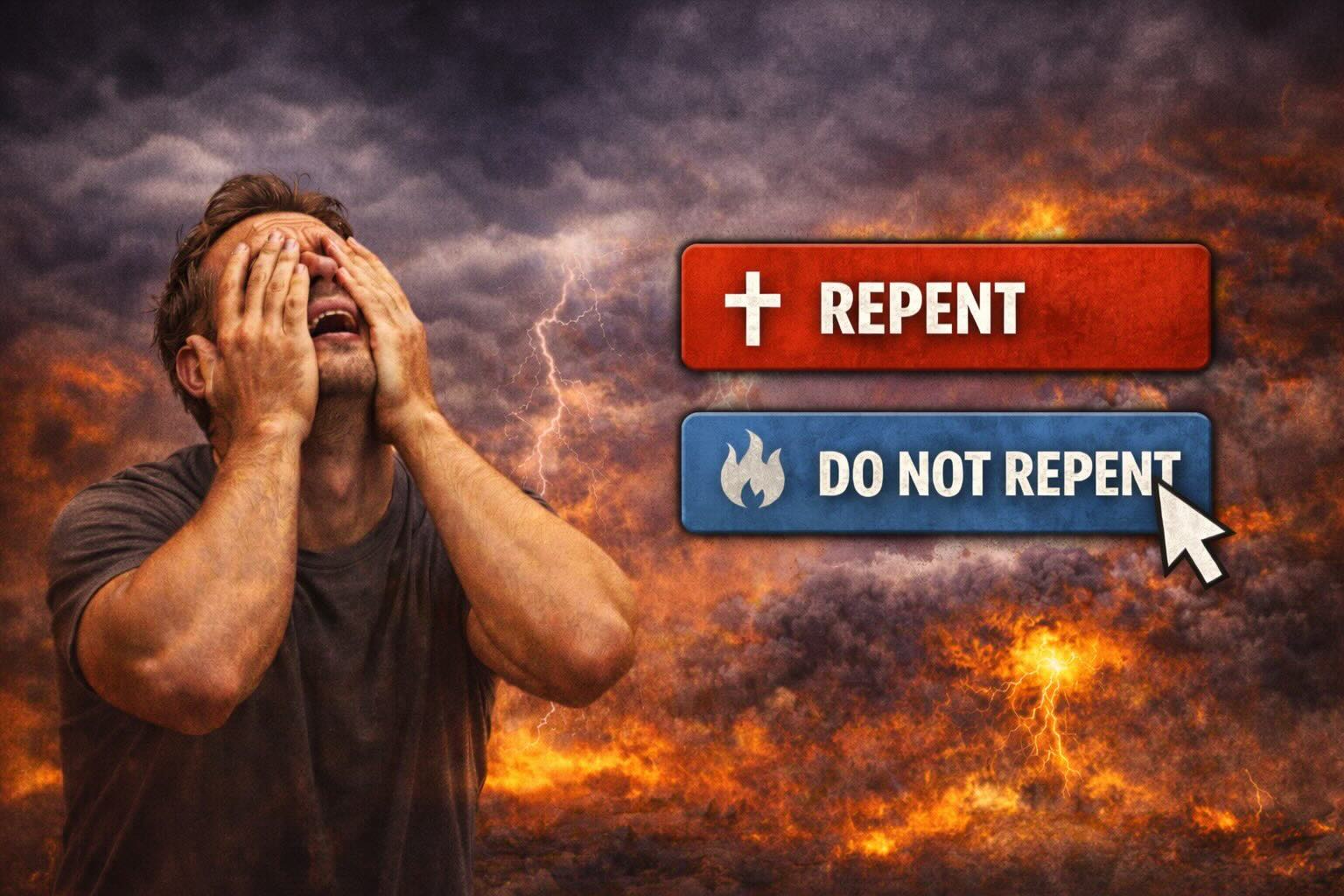
Having acknowledged the severity and righteousness of God’s judgment, and how I fail to honor him, the next way to respond is repentance.
Repentance in this case has two components:
- Acknowledge my sin and acknowledge that I deserve death because of it.
- Run headlong into the blood of Jesus.
Just as the people of God were protected from God’s wrath in Egypt, so too will all those who plead the blood of Jesus Christ.
When we consider Jesus, we behold an innocent man who lived a perfect life of obedience to God’s commands, yet voluntarily took upon himself the judgment of God that you and I deserve. The prophet Isaiah characterizes his work with these words:
But He was wounded for our transgressions,
He was bruised for our iniquities;
The chastisement for our peace was upon Him,
And by His stripes we are healed.
All we like sheep have gone astray;
We have turned, every one, to his own way;
And the Lord has laid on Him the iniquity of us all.
He was oppressed and He was afflicted,
Yet He opened not His mouth;
He was led as a lamb to the slaughter,
And as a sheep before its shearers is silent,
So He opened not His mouth.
(Isaiah 53:5–7)
Conclusion
In the end, there are and will still be questions about the timing and severity of God’s judgment. And this side of eternity, we will not have all of the answers. However, it is my sincere hope that I have given you a framework to respond biblically and helpfully, a way in which honors the Father’s holy character, brings glory to Christ’s sacrifice, and elicits thanksgiving to the Spirit—the one who applies redemption and empowers the people of God to respond in faith and hope.
The sermon that “goes along” with this post can be accessed here: https://www.youtube.com/watch?v=aHNS1RnF4AM