
Introduction
In reading the Book of Esther, one of the main things we learn is that God likes to tell the same story over and over again. It’s related to that theological reality which the Apostle points us to, namely that the Word was with God and the Word was God, that all things were made through the Word of God and all things hang together in Him.
God did not create the cosmos and then wonder what to do with it. God created the cosmos with His Word in His heart. The world was made to display His Word. And His Word is the exact imprint of His Nature.
This means that the story that the history of the cosmos tells is all about its Maker—it is all about God: His faithfulness, His love, His mercy, His justice and goodness and patience and also His fierce jealousy for His people and His glory.
As John Calvin has said, the world is a theatre for God’s glory. The cosmos is simply the stage for the Divine Drama to unfold: the Divine Drama which tells us perfectly about the Divine Author.
He Gave Us Stories
Consider the nature of the Scriptures. In the Scriptures God gave us stories. He gave us the story of mankind, of Abraham and Sarah, of Israel in Egypt and then their trek to the promise land. He gave us stories that repeat over and over again in all kinds of ways one main story He is telling.
And what is this main story?
It’s the story of redemption.
It is the story of Sarah being taken into Pharaoh’s house, only for the Lord to rain down plagues upon that world power, and bring out of it the mother of His covenant people.
It is the story of Joseph, who being sold into slavery, remains loyal to the Lord and remains an honest and upright man among pagans; and the Lord favors him, takes him from the dungeon pit to the right hand of Pharaoh, filling him with wisdom and strength so that through Joseph the Lord provides for and protects His people.
It is the story of the twelve tribes of Jacob multiplying beyond number in the kingdom of Egypt, of Pharaoh seeking to extinguish them, killing their sons and thus forcing their daughters to marry Egyptians. The story of His people suffering under that cruel bondage, but then with a mighty hand delivering them and leading them as a man does His bride to their homeland.
And ultimately, all of these point to the story of Christ and His fiery love for His people shown in His redemption of us from all evil, and His plan to bring us into a new and more glorious Paradise.
It is this story that we come to in the Book of Esther. It is another variation on the same theme of redemption. The Lord takes this young daughter of Sarah, who is taken into the heart of the empire. He gives her favor, making her Queen over it all. And then He uses her to protect and save His beloved people: not only His people whose faces Esther knew, but God’s people scattered throughout the entire Persian empire including those back in Jerusalem who were busy rebuilding the Holy City.
Ballast for Your Ship
Again, in the Scriptures, God has given to us lots and lots of stories. Stories that tell us how it will go. Stories that are meant to put ballast in our ships. Stories that are our roots—roots that sink not only into our shared past, but which draw their strength and substance from the eternal story God is telling.
Since this is the case, one of the biggest takeaways for us from the Book of Esther is this:
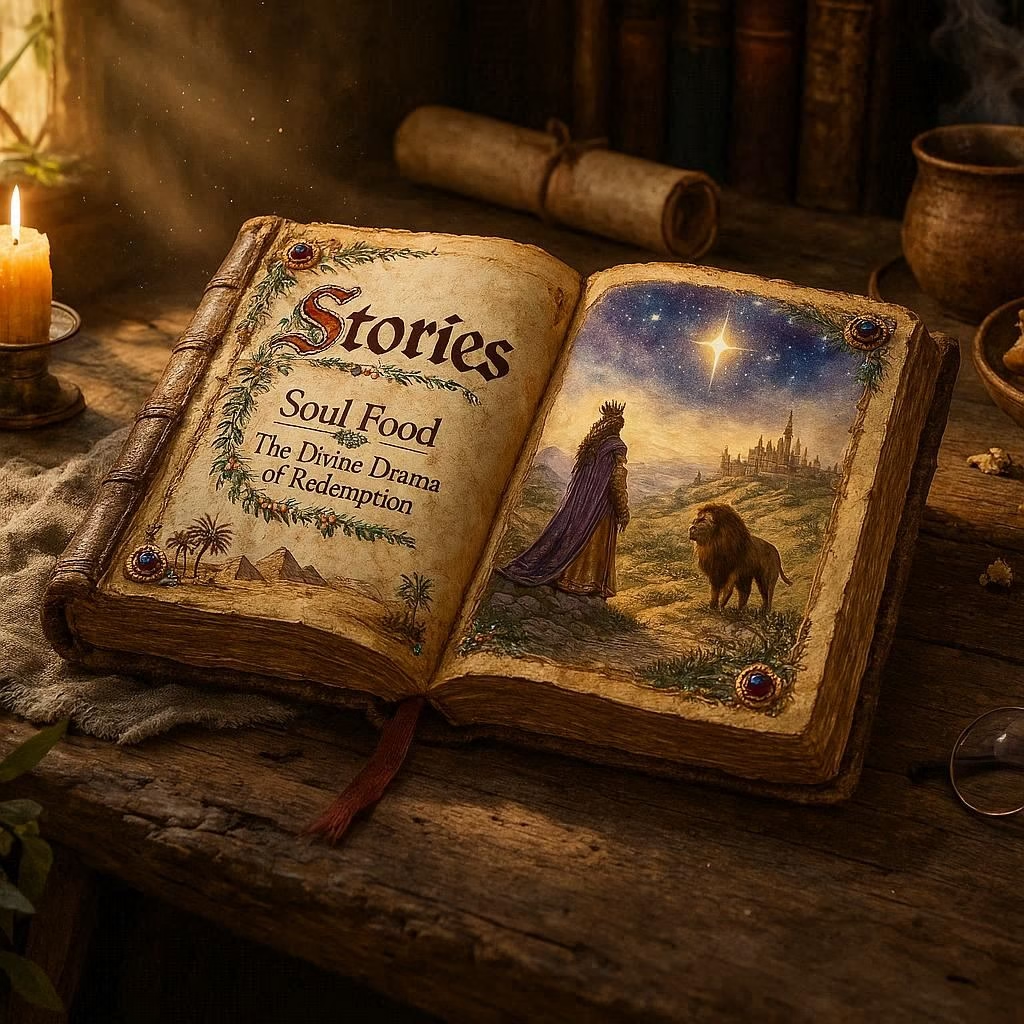
Fill up your soul and fill up the souls of your kids with stories.
In God’s world, stories are our soul’s food. So feed upon the stories of God. Feed upon all the stories in the Bible. And feed on all the good and right and true stories our fathers and mothers have told, and even seek to add to them your own.
Feed upon stories, not so that you can escape by them. Stories are not about escaping to a fake, but better world. Far from it. The Book of Esther is certainly not escapist literature.
Rather, feed upon stories so that you can sleep soundly, so that you and your family are not fazed by a Haman, or a Xerxes, or a Pharaoh, or by the devil himself.
As usual, G. K. Chesterton said it best. He writes this about stories, and about fairy tales in particular:
“Fairy tales do not tell children the dragons exist. Children already know that dragons exist. Fairy tales tell children the dragons can be killed.”
Stories don’t take us away from this world; they don’t help us escape from the Hamans of the world, or from the demons in our day. Instead, they are bread for our bellies. They put ballast in our ship so that we can face this world of dragons with confidence, and with the laughter of our God.
*Note: This article was penned by Chase Fluhart and connected to the sermon he recently preached at HCC. The sermon can be found here: https://www.youtube.com/watch?v=G3zzeyIJTec.