
Introduction
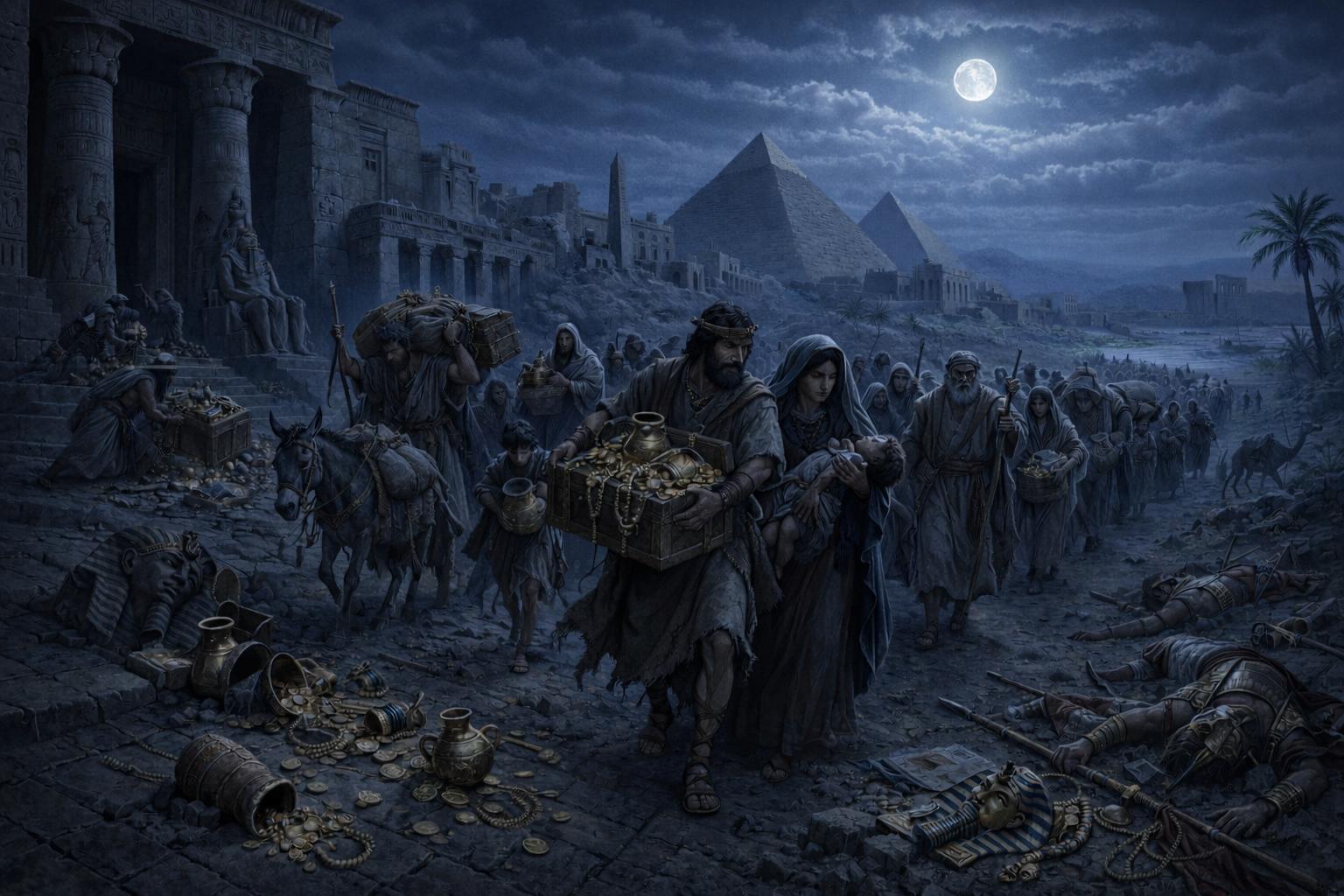
When the Hebrews walked out of Egypt, God ensured that they did not leave empty-handed. They carried silver, gold, and garments given by the Egyptians (Exod. 12:35–36). The Scripture says plainly: “Thus they plundered the Egyptians.”
At first glance, it seems as if it is merely a picture of a defeated enemy. For plundering is often most associated with it. However this moment becomes a thread that runs throughout the rest of the Scriptures and creates a beautiful picture of what God is doing in the world. What begins as literal spoil becomes a picture of cosmic redemption.
Plunder as Divine Justice
In Exodus, the plundering of Egypt is not opportunistic theft. It is prophetic and judicial recompense. God had promised Abraham that after affliction, his descendants would come out “with great possessions” (Gen. 15:14). The gold in Israel’s hands was the visible sign that Yahweh, the Divine Warrior, had defeated Pharaoh.
The pattern is clear:
- God fights…
- God wins…
- God distributes the spoil…
This continues in the conquest narratives (Joshua 6–8) and in David’s victories (2 Sam. 8), where plunder is either devoted to the Lord or dedicated for temple worship. The spoil always belongs first to God.
The notion of plunder as justice is not just something that works in Israel’s favor, for we also see it work against them as well. Consider Isaiah 42:22-25, where God’s people are described as having been “robbed and plundered.” And we know that all of this came about because of their disobedience to God. Biblically, being plundered is a fruit of disobedience.
The Prophets: From Forced Plunder to Willing Tribute
As redemptive history unfolds, the prophets expand upon the image.
In Book of Isaiah 60, the wealth of the nations flows into Zion—not by coercion, but by homage:
“The wealth of the nations shall come to you.”
Likewise, Book of Zechariah 14 speaks of Judah gathering abundant spoil in the day of the Lord’s victory.
But something shifts. The nations are no longer merely defeated enemies—they become worshipers bringing tribute. The imagery of plunder starts to look like conversion.
Gold and silver are no longer symbols of compensation alone. They become symbols of consecration.
The Messiah as the Greater Warrior
The Psalms anticipate a greater victory. For example in the psalms, particularly Psalm 68:18, we read:
“You ascended on high, leading captivity captive.”
Originally a celebration of Yahweh’s triumph, this verse becomes messianic in scope.
When Paul quotes it in Ephesians 4:8, he applies it directly to Christ. The risen Lord ascends in victory—and instead of hoarding the spoil, He gives gifts to His people.
The direction reverses:
- In Exodus, Israel receives gold.
- In Christ, the Victor distributes gifts.
Plundering the Strong Man
Jesus Himself uses this warfare imagery. In the Gospel of Matthew, particularly in 12:29, He speaks of binding the strong man and plundering his house.
The strong man is Satan.
The house is his kingdom.
The plunder are his captives.
Thus Exodus was a shadow. Pharaoh was a type. But at the cross, Christ invades the deeper Egypt. He binds the true oppressor and liberates His people.
Paul makes this explicit in Colossians 2:15, he writes:
“He disarmed the rulers and authorities and put them to open shame, triumphing over them.”
This is victorious language. Christ marches in victory. The demonic powers are stripped of authority, with the cross being the battlefield.
The gold of Egypt has become the redeemed of the nations.
The Final Picture: The Nations as Spoil
The story does not end at the ascension. In Revelation 21:24–26, John sees the kings of the earth bringing their glory into the New Jerusalem.
Isaiah’s vision is fulfilled. The wealth of the nations enters the city of God.
But the true treasure is not precious metal, rather it is people.
The nations themselves become trophies of grace.
Conclusion
The trajectory looks like this:
- Exodus — God plunders Egypt in judgment.
- Conquest & David — Spoil is regulated and dedicated.
- Prophets — Wealth flows to Zion in hope.
- Christ — The greater Warrior binds the strong man.
- New Creation — The redeemed nations bring their glory home.
What began as historical plunder becomes total liberation.
In Egypt, Israel walked out with gold.
At Calvary, Christ walked out with captives.
In glory, the nations walk in as worshipers.
The staff of Moses gives way to the cross of Christ.
The spoil of war becomes the harvest of redemption.
In the end, plunder was never about wealth. It was always about victory—and about who truly owns the nations. And in Exodus, the Satanically-inspired Pharaoh learns this the hard way. This reality should elicit praise to God for what he has and is doing, motivate and give hope to his people to live faithfully in the interim period.