
Introduction
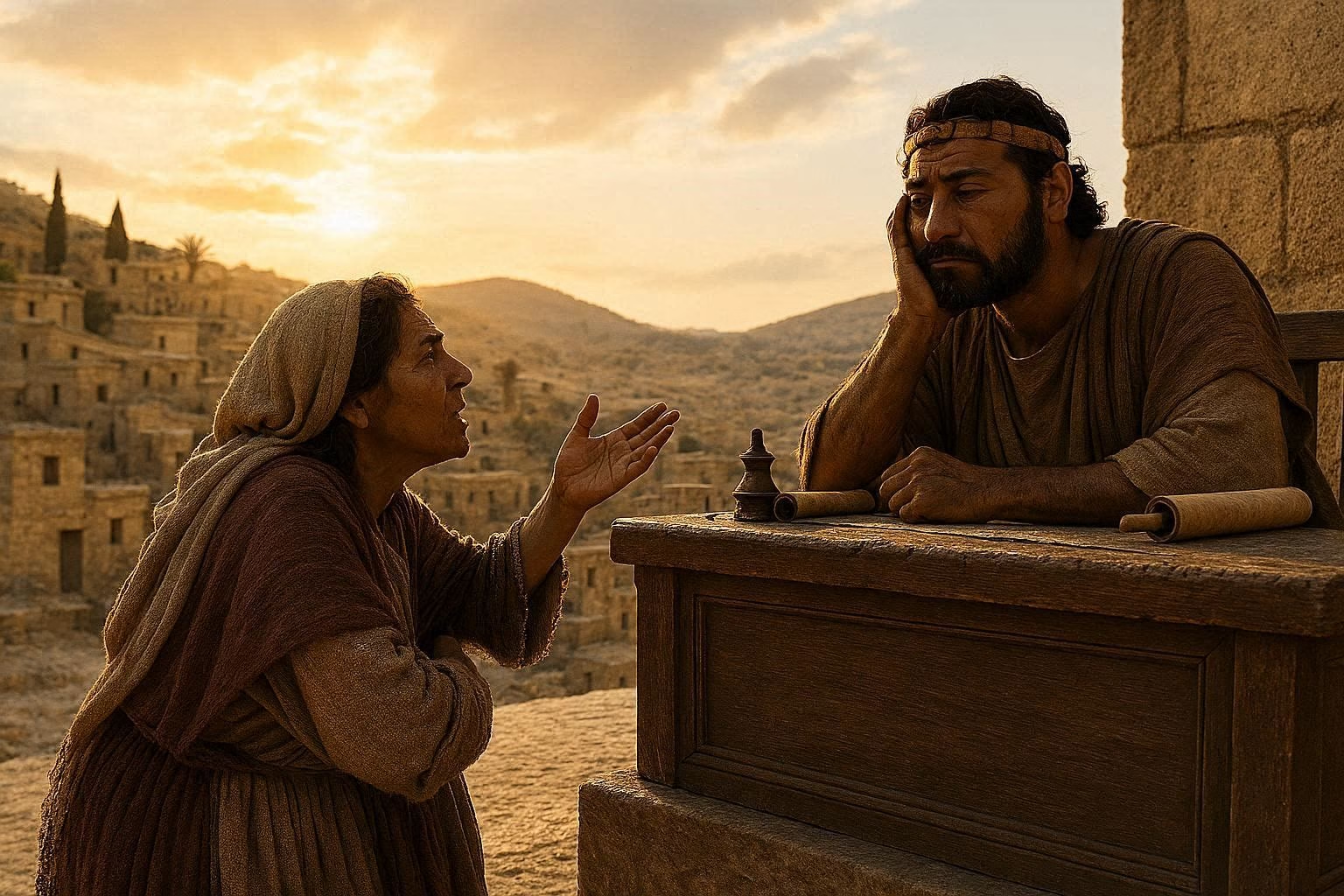
This past Lord’s Day we considered the Parable of the Persistent Widow. In it, Jesus exhorts His disciples that they “ought always to pray and not lose heart” (Luke 18:1). The basis for this exhortation is found in the contrast between the unjust judge and our heavenly Father. If an unrighteous judge will eventually grant justice simply to preserve his own peace, how much more will God—who is perfectly righteous, faithful to His promises, and steadfast in His love for His people—hear the cries of His elect and act on their behalf?
One aspect of the parable that we did not have time to explore, however, is Jesus’ closing question. After assuring His disciples that God will vindicate His people, He concludes with these sobering words:
“Nevertheless, when the Son of Man comes, will He really find faith on the earth?” (Luke 18:8)
What did our Lord mean by this question? Why does He end a parable about persistent prayer by asking about faith? And how should His words shape the way we understand both this parable and our own lives as His disciples?
The goal of this post is to consider those questions by looking more closely at the context of the parable and the significance of Jesus’ final words.
The Backstory
To understand the Persistent Widow rightly, we must first appreciate the context in which Luke places the parable. The chapter divisions in our Bibles can obscure Luke’s train of thought, but Luke 18 is the natural continuation of Jesus’ teaching in Luke 17.
The discussion begins when the Pharisees ask Jesus when the kingdom of God would come (Luke 17:20). Jesus responds that “the kingdom of God is not coming in ways that can be observed” (ESV). Why? Because the kingdom had already arrived in the person of the King. As the ESV helpfully translates verse 21, “the kingdom of God is in the midst of you.”
This rendering is preferable to the older translation, “within you.” Jesus is speaking to the Pharisees, not to believing disciples, so He is hardly saying that God’s kingdom resided within them. Rather, the kingdom stood in their very midst because the King Himself was standing before them. This fits perfectly with Jesus’ public ministry, in which He repeatedly proclaimed, “Repent, for the kingdom of heaven is at hand” (Matt. 4:17), and, “The time is fulfilled, and the kingdom of God is at hand; repent and believe in the gospel” (Mark 1:14–15).
Having established that the kingdom has already broken into history, Jesus then turns His attention to what lies ahead. Beginning in Luke 17:22, He describes the coming of the Son of Man. Just as in the days of Noah and Lot, people will carry on with the ordinary affairs of life—eating, drinking, buying, selling, planting, and building—until the day God’s judgment suddenly arrives. The emphasis is not on identifying dates but on remaining watchful and prepared.
That naturally raises an important question: How are Christ’s disciples to live while they await the coming of the Son of Man?
Luke 18 answers that very question.
Rather than becoming distracted by the ordinary concerns of life or discouraged by the apparent delay of God’s justice, believers are to “always pray and not lose heart.” The Persistent Widow is therefore more than a lesson about prayer in general. She is a portrait of the church living between Christ’s first coming and His return—a people who continue to trust, continue to pray, and continue to wait upon their righteous King.
Seen in this light, Jesus’ closing question is not an afterthought but the climax of the parable:
“Nevertheless, when the Son of Man comes, will He really find faith on the earth?”
The question is no longer merely When will the Son of Man come? Luke 17 has already addressed that. The question now is, What kind of people will He find when He comes?
What Kind of Faith?
At first glance, Jesus’ question can sound almost pessimistic, as though He wonders whether any believers will remain when He returns. But that is not His point.
The context suggests that Jesus is asking whether He will find this kind of faith—the kind He has just described in the parable. The widow’s faith was not spectacular. She performed no miracles, preached no sermons, and accomplished no great feats. Instead, her faith was demonstrated by her persistence. She refused to give up. She continued coming. She continued asking. She continued believing that justice would eventually be done.
That is precisely the kind of faith Jesus commends.
Faith, then, is not merely intellectual assent to certain doctrines, important though that is. It is a steadfast trust in God’s character that expresses itself through continual dependence upon Him. Prayer is simply faith given a voice. Every time God’s people bow their heads and cry out to Him, they confess that He alone is able to accomplish what they cannot.
Conversely, when we cease praying, it often reveals something deeper. We begin relying upon ourselves. We subtly conclude that God either cannot, will not, or need not intervene. Our prayerlessness frequently exposes our unbelief.
Jesus therefore moves seamlessly from persistent prayer to enduring faith because the two cannot ultimately be separated.
A Question for Every Generation
The context of the parable is the second coming of Jesus, particularly as it relates to his coming in judgment of unfaithful Israel and ties up what began in Luke 17. However by intentionally leaving the parable with a question rather than a declaration, Jesus speaks to his people throughout the future generations. For in ending this way, he passed the onus on to future generations to answer that question for themselves.
If Jesus was to return during our generation, would Christ find us distracted by the cares of this world, living as though His kingdom were of little consequence? Will He find us consumed by the ordinary affairs of life, much like the people in the days of Noah and Lot? Or will He find us watching, waiting, praying, and trusting our righteous King?
The answer will not be measured merely by the correctness of our theology, but by the perseverance of our faith.
Will we continue to seek first the kingdom of God?
Will we continue crying out, “Your kingdom come, Your will be done”?
Will we continue believing that our King will keep every promise He has made?
Those are the questions Jesus intends to press upon our hearts.
Conclusion
The Persistent Widow is ultimately not a story about overcoming God’s reluctance. It is a story about resting in God’s faithfulness.
Our Lord has already assured us that the Judge of all the earth will do right. He will vindicate His elect. He will establish perfect justice. He will return in glory.
The only remaining question is whether we will continue trusting Him until that day arrives.
May Holy Covenant Church be marked by the kind of faith our King longs to find—a faith that perseveres in prayer, refuses to lose heart, confidently awaits the coming of the King, and joyfully believes that every promise of God finds its “Yes” in Jesus Christ.
HCC Blog Link: https://holycovenantchurch.com/blog/
Sermon Link: https://www.youtube.com/watch?v=2BMrOTphREU
Previous Post Link: https://holycovenantchurch.com/the-marriage-celebration-to-come/